Why everyone seems happy on LinkedIn except you: toxic positivity unveiled
It's toxic positivity on LinkedIn: it became a group that demands even pain look like a learning experience. And your self-esteem pays the price.

Toxic positivity on LinkedIn is not about people being more successful. Across all social networks we seek the same thing: confirmation that we exist. What is different is that LinkedIn stopped being a job search tool and became a group that tells you what you are worth. That group doesn't ban sadness; it bans sadness without a lesson. When even pain must come with 5 key learnings, your doubt without a lesson feels like failure.
I've written here before about how hard it is to show ourselves on LinkedIn — that mix between wanting to share and needing someone to validate us. If you're interested, it's here: personal branding and narcissism on LinkedIn.
This is the other side. Not the one posting. The one watching.
It's 8:14 AM. You're on the subway with half a coffee, you open LinkedIn, and in 30 seconds you see: "Thrilled to announce my promotion", "I was laid off: 5 learnings that made me stronger", and "Grateful to my team for closing the quarter". Meanwhile, you just came out of a weekly meeting where your bonus was shifted, not knowing if your role survives the reorganization.
You know it's a curated snapshot. And yet it leaves an uncomfortable knot in your stomach.
Why does LinkedIn hook us just like any other social network?
Checking likes isn't mere vanity. It's like sending "did you see my message?" on Slack. It's confirming that you're still there.
As children we feel omnipotent. We grow up, the world tells us we're not, so we project an ideal version ahead to recover that lost perfection. Freud described it clearly: *"What he projects before him as his ideal is the substitute for the lost narcissism of his childhood in which he was his own ideal"*.
On social media, that ideal has a feed. Toxic positivity starts here: LinkedIn sells you a pre-edited ideal — resilient, grateful, constantly learning. In that sense, it's identical to Instagram. The underlying need is the exact same.
What is different is what LinkedIn did with that ideal.
Why does even pain on LinkedIn have to come packaged with key learnings?
Before, LinkedIn was where you looked for a job. Today, it's where you verify if your career is on track. It ceased to be a tool and became a judge — an organization in your head dictating your worth.
Every large group operates this way. It gathers for a real task — in theory, sharing useful work information — but when that task triggers anxiety, it invents another task to stay united. Bion conceptualized the difference between *work group* and *basic assumption group*: *"When a group meets, it meets for a specific task"*, but quickly abandons its real task to hold onto a shared fantasy that maintains cohesion. He described, for example, the *pairing group*, where the group unites around the hope that something good is about to come.
LinkedIn as a large group operates right there. The real task causes anxiety: layoffs, your role becoming obsolete, bonuses canceled. So the group shifts the task to something more tolerable: sustaining the fantasy of non-stop personal growth.
And here lies the heart of toxic positivity on LinkedIn: it doesn't forbid sadness. It forbids sadness without a lesson.
There are two types of posts that seem vulnerable, but are complete opposites.
The Type A is: *"I was fired and I'm shattered, I'm scared, I don't know how I'll pay rent"*. That post dies with 3 likes. It breaches the group's defense mechanism, forcing everyone to contain raw anxiety.
The Type B is: *"I was fired: 5 learnings that made me stronger, grateful to my team, excited for what's next, #opentowork"*. That one gets likes. Lots of them. It generates empathy precisely because it comes pre-packaged and resolved.
In Melanie Klein's framework, these are called manic defenses: *"Omnipotence, denial, and idealisation, closely bound up with ambivalence"* (Klein, 1940, cited in Hinshelwood, 2017). Translated: turning pain into inspirational content in 48 hours to avoid feeling it. Omnipotence ("I can handle anything"), denial ("it didn't hurt that much"), and idealization ("everything happens for a reason").
It is sanitized vulnerability: human enough to connect, resolved enough not to threaten. That's why it drives engagement — it relieves the collective anxiety.
The ideal becomes more tyrannical. It doesn't ask you to never suffer. It demands that you suffer well. With bullet points.
Why does it leave you feeling inadequate, even when you know it's curated?
If you're stuck in Type A without a neat lesson, you feel excluded and ashamed for not being resilient. If you watch Type B, you feel less capable than them. They've already turned their layoff into a TED talk while you're still in a meeting with your boss trying to process what happened.
Here emerges what erodes self-esteem the most.
Melanie Klein named envy *"the worst of all vices"* and distinguished it sharply from mere longing. Admiration is "what a nice dress, I'd like one". The envy she describes is different: *'"If your dress is really so nice, then I want to tear it up, and to destroy any good feelings you have about it, and about yourself"'* (Klein, cited in Hinshelwood, 2017).
You don't want the other person's job. You want, for a split second, to tear down the good feeling they seem to have about themselves, because that good feeling exposes that you lack it in that moment. And then guilt sets in.
That loop — scroll, compare, internally attack the good object, feel guilty — is what leaves you hollow after scrolling. Knowing it's toxic positivity doesn't protect you, because it's not happening at a rational level. It's happening where you placed your ideal: outside, in the feed.
When your ideal lives outside, every time someone else shines — even through well-packaged pain — you lose.
It's not about deleting LinkedIn. It's about shrinking it back to size. Let it be a secondary tool again, not your primary judge.
The remaining question is not whether others are truly happy on LinkedIn.
It's what part of you needs to believe them to feel worthy at work.
Frequently Asked Questions
Why does a layoff post with key learnings get so many likes?
Because it doesn't break the group's defense mechanism; it reinforces it. It's a manic defense — omnipotence, denial, and idealization — that converts pain into a quick lesson, generating empathy without forcing the group to contain raw grief.
Why does toxic positivity on LinkedIn make me feel bad even when I know it's fake?
Because it's not a comparison of facts; it's a comparison of identity. When LinkedIn replaces your professional ideal self, seeing another person shine measures you against who you think you should be. The envy that arises isn't wanting their job, but the ache of seeing them hold a self-worth that you currently lack.
Freud, S. (1914). On Narcissism: An Introduction. Verified: "What he projects before him as his ideal is the substitute for the lost narcissism of his childhood in which he was his own ideal".
Bion, W. R. (1961). Experiences in Groups. Verified: "When a group meets, it meets for a specific task" / work group vs basic assumption group distinction / pairing group, related to the Oedipal situation.
Hinshelwood, R. D. (2017). Melanie Klein: The Basics. Verified: contains "The worst of all vices – Envy" / "'If your dress is really so nice, then I want to tear it up, and to destroy any good feelings you have about it, and about yourself'" / and definition of manic defenses: "Omnipotence, denial, and idealisation, closely bound up with ambivalence" (Klein, 1940, p. 131, cited in Hinshelwood, 2017).
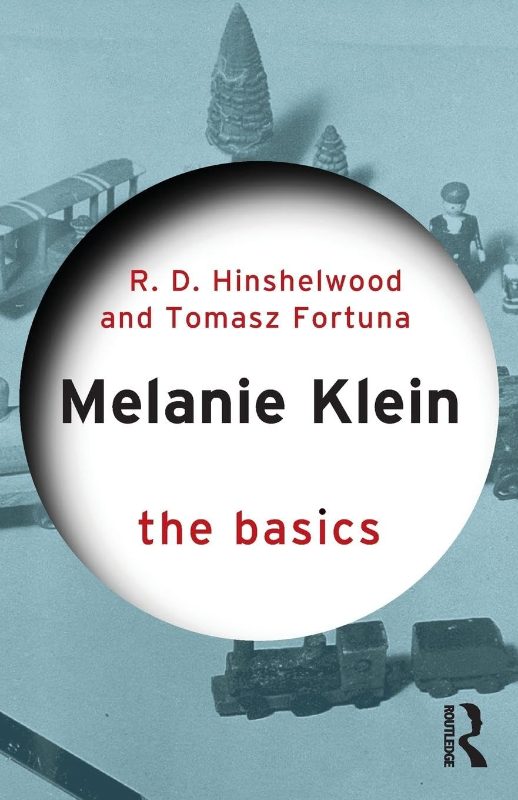
Bibliographic Reference
Robert D. Hinshelwood & Tomasz Fortuna (2017) — Melanie Klein: The Basics
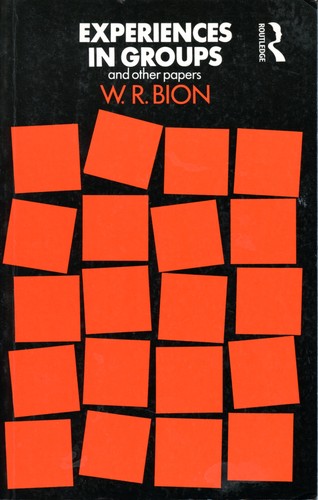
Bibliographic Reference
Wilfred R. Bion (1961) — Experiences in Groups


